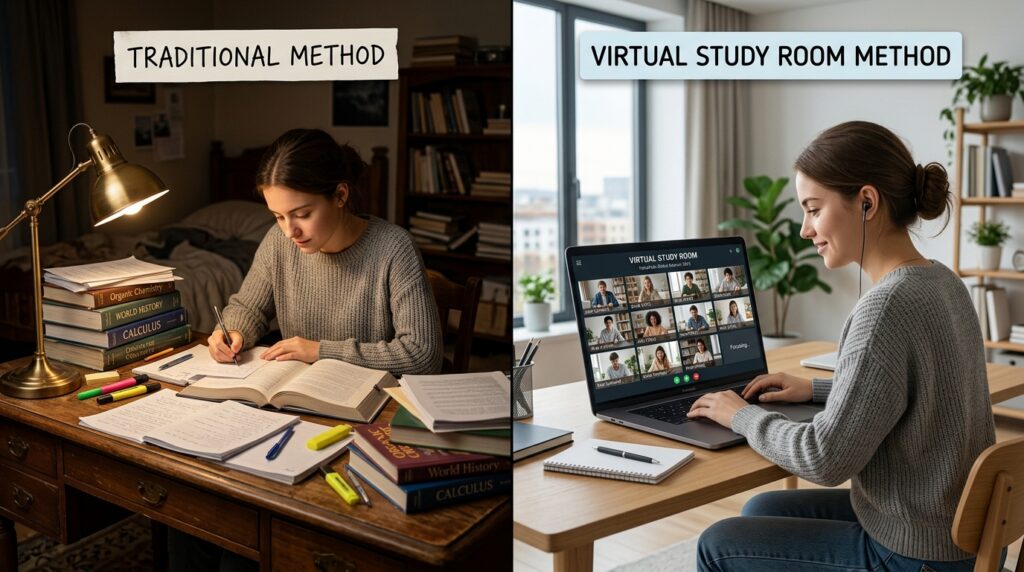
The way people study and work has changed dramatically over the last few years. With the rise of remote learning, online education, and digital collaboration tools, traditional study methods are no longer the only option for staying productive.
Today, virtual study rooms have emerged as a powerful alternative, helping students, freelancers, remote workers, and professionals maintain focus in an increasingly distracting digital world.
But how do virtual study rooms compare to traditional study methods? Which approach is more effective for concentration, motivation, and long-term productivity?
In this comprehensive guide, we’ll compare both methods and help you decide which one best fits your learning and working style.

What Are Traditional Study Methods?
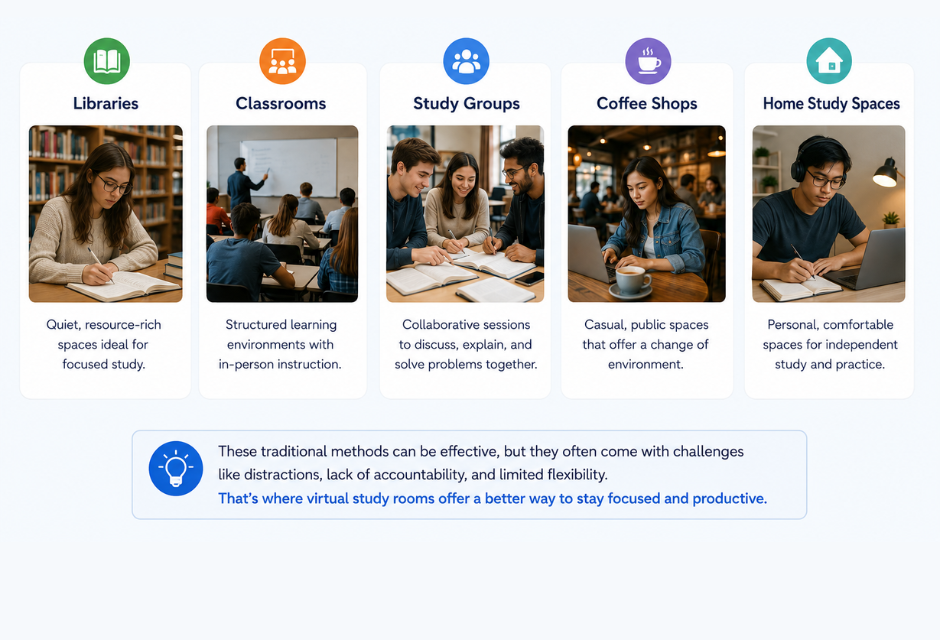
Traditional study methods refer to studying alone or in physical environments such as:
- Libraries
- Classrooms
- Study groups
- Coffee shops
- Home study spaces
For decades, these environments have been the standard choice for students and professionals looking to focus on their tasks.
Challenges of Traditional Study Methods
- Travel time and commuting
- Limited access to study partners
- Noise and environmental distractions
- Scheduling conflicts
- Lack of accountability when studying alone
Read Also:- How Virtual Study Rooms Improve Focus and Productivity
What Are Virtual Study Rooms?
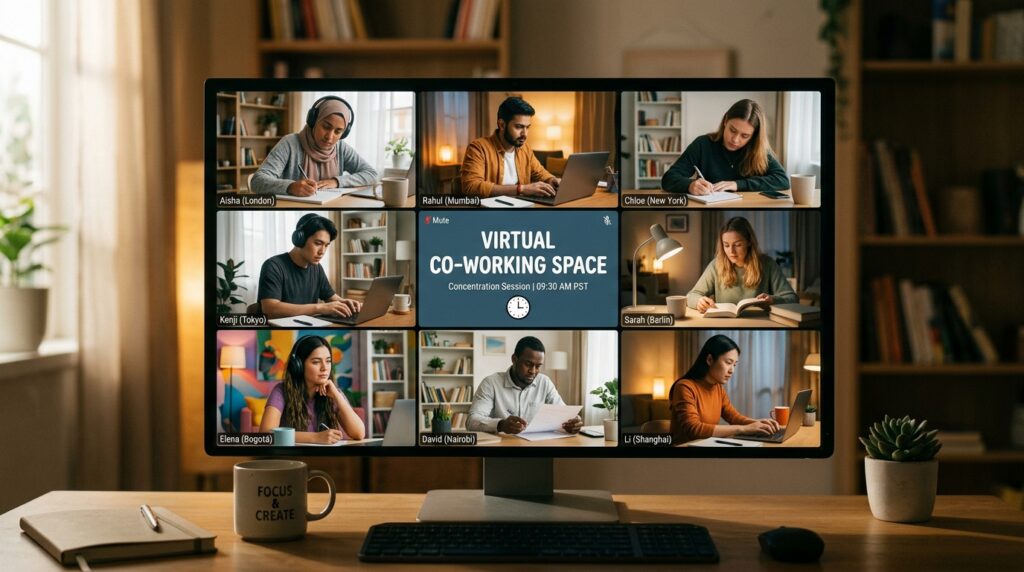
Virtual study rooms are online spaces where people join together to study or work silently while remaining focused on their individual tasks.
Platforms like Study Mates provide a distraction-free environment where users can connect with productive individuals from around the world.
Unlike social media platforms, virtual study rooms are specifically designed to encourage concentration, consistency, and accountability.
Why Virtual Study Rooms Are Becoming Popular
Remote learning and remote work have increased the need for digital productivity solutions.
People often struggle with:
- Procrastination
- Social media distractions
- Lack of motivation
- Difficulty maintaining routines
Virtual study rooms address these challenges by creating a sense of community and accountability without requiring physical presence.
Virtual Study Rooms vs Traditional Study Methods
1. Accessibility
- Traditional Study Methods
Users must travel to libraries, classrooms, or study groups.
- Virtual Study Rooms
Users can join from anywhere with an internet connection.
Winner: Virtual Study Rooms
2. Accountability
- Traditional Study Methods
When studying alone, accountability can be limited.
- Virtual Study Rooms
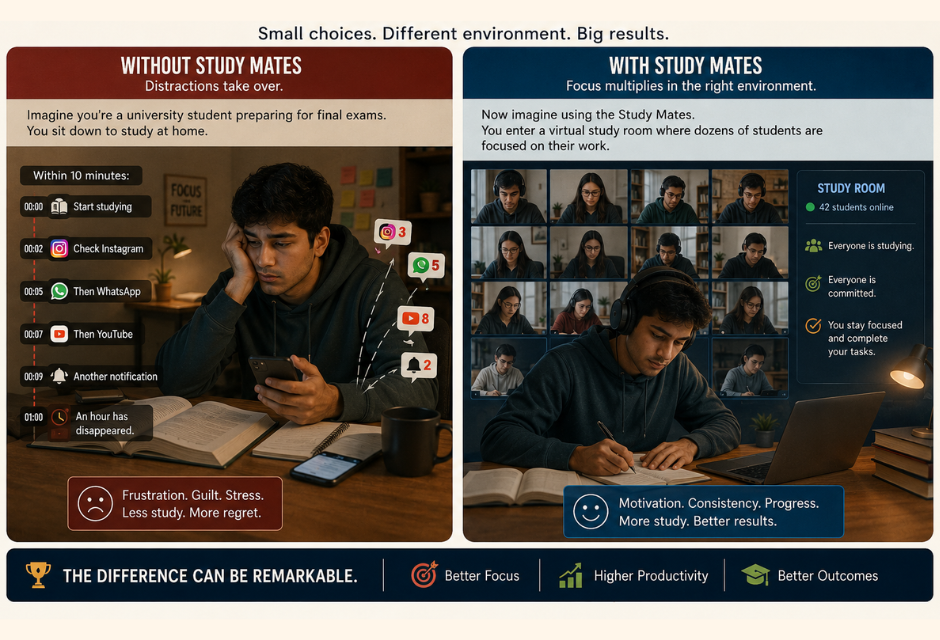
Seeing others focused on their tasks encourages users to stay committed to their own work.
This concept is known as “body doubling,” where working alongside others increases productivity.
Winner: Virtual Study Rooms
3. Flexibility
- Traditional Study Methods
Schedules often depend on library hours, classroom availability, or group meetings.
- Virtual Study Rooms
Available anytime, allowing users to study or work according to their personal schedule.
Winner: Virtual Study Rooms
4. Social Connection
- Traditional Study Methods
Offer direct human interaction and collaboration.
- Virtual Study Rooms
Provide a sense of community while maintaining individual focus.
Users benefit from knowing they’re not working alone without engaging in distracting conversations.
Winner: Tie
5. Cost
- Traditional Study Methods
May involve transportation costs, memberships, or study materials.
- Virtual Study Rooms
Most virtual study platforms are highly affordable or free to access.
Winner: Virtual Study Rooms
6. Distraction Control
- Traditional Study Methods
Environmental distractions can vary significantly.
- Virtual Study Rooms
Purpose-built for focused work and often include silent sessions that reduce interruptions.
Winner: Virtual Study Rooms
Which Method Is Better for Students?
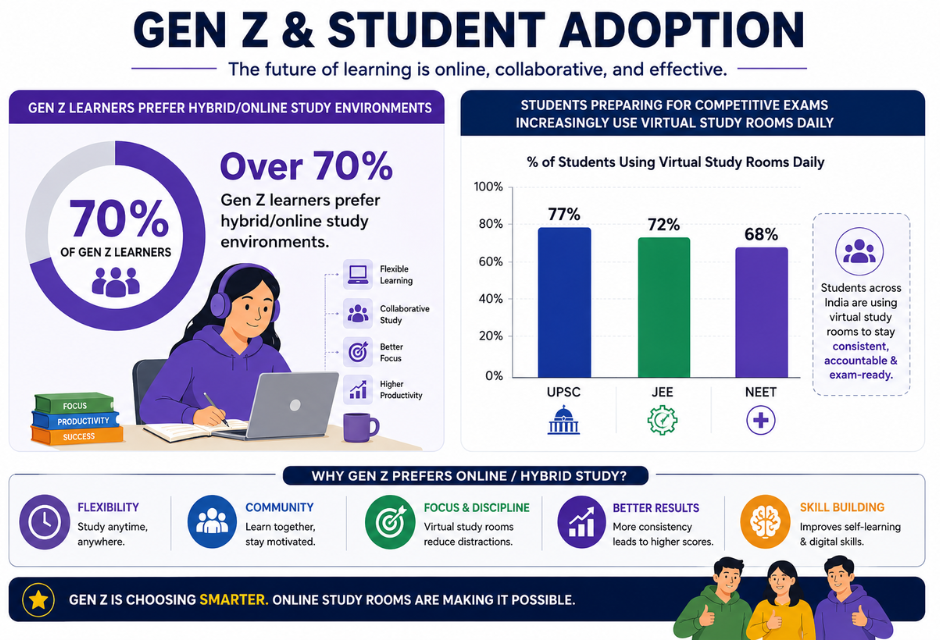
Students preparing for exams often need:
- Consistent study routines
- Accountability
- Reduced distractions
- Motivation
Virtual study rooms can help students remain focused for longer periods while creating a productive study habit.
However, traditional study methods remain valuable for classroom learning and collaborative projects.
Read Also:- How to Stop Getting Distracted by Your Phone While Studying

Which Method Is Better for Remote Workers and Freelancers?
Remote workers frequently face challenges such as:
- Isolation
- Home distractions
- Lack of structure
Virtual study rooms provide a professional environment where users can maintain focus and productivity throughout the day.
For freelancers and remote professionals, virtual study rooms often outperform traditional study methods because they combine flexibility with accountability.
The Best Approach: Combining Both Methods
The most effective productivity strategy may not be choosing one over the other.
Many successful students and professionals use a hybrid approach:
- Attend classes and in-person study sessions when needed.
- Use virtual study rooms for daily focused work.
- Join online accountability sessions.
- Collaborate physically when teamwork is required.
This balance allows users to enjoy the strengths of both methods.
How Study Mates Helps You Stay Focused

Study Mates is an online productivity platform built for people who want to stay focused while studying or working.
Whether you’re a student preparing for exams, a freelancer managing projects, or a remote worker seeking accountability, Study Mates provides silent virtual study rooms where you can work alongside focused individuals from around the world.
By eliminating distractions and creating a productive atmosphere, Study Mates helps users build better habits, improve concentration, and accomplish more every day.

Summary
Traditional study methods have served learners well for generations, but modern challenges require modern solutions.
Virtual study rooms offer flexibility, accessibility, accountability, and distraction-free environments that help people stay productive regardless of location.
While traditional methods remain valuable for collaboration and face-to-face learning, virtual study rooms are quickly becoming the preferred choice for students, freelancers, remote workers, and professionals looking to maximize focus and productivity.
If you’re searching for a better way to stay accountable and get more done, virtual study rooms may be exactly what you need.
Frequently Asked Questions (FAQs)
1. How do virtual study rooms help students prepare for exams?
Virtual study rooms help students maintain consistent study routines, minimize distractions, stay motivated, and improve time management, making exam preparation more effective.
2. Are virtual study rooms better than studying alone?
For many people, yes. Virtual study rooms provide accountability and social presence without distractions, helping users stay committed to their goals while enjoying the benefits of a productive community.
3. Do virtual study rooms help reduce procrastination?
Yes, virtual study rooms can significantly reduce procrastination by creating a structured environment where users are encouraged to stay focused and accountable for their work.
4. Who can benefit from using virtual study rooms?
Virtual study rooms are beneficial for students, exam candidates, freelancers, remote employees, entrepreneurs, researchers, and anyone looking to improve focus and productivity while working online.
5. How can Study Mates help improve focus and study habits?
Study Mates provides silent virtual study rooms where users can work alongside focused individuals worldwide. The platform helps users eliminate distractions, build productive habits, stay accountable, and achieve their academic or professional goals more effectively.
6. How many study rooms are available on Study Mates?
Study Mates offers multiple virtual study rooms designed to accommodate different productivity needs. Users can choose from various rooms and join the one that best matches their study or work schedule.
7. What makes Study Mates different from traditional study methods?
Unlike traditional study methods that may require travel or fixed schedules, Study Mates offers flexible access to virtual study rooms from anywhere. It combines convenience, accountability, and community to create a highly productive environment.